

Last Updated: July 2026
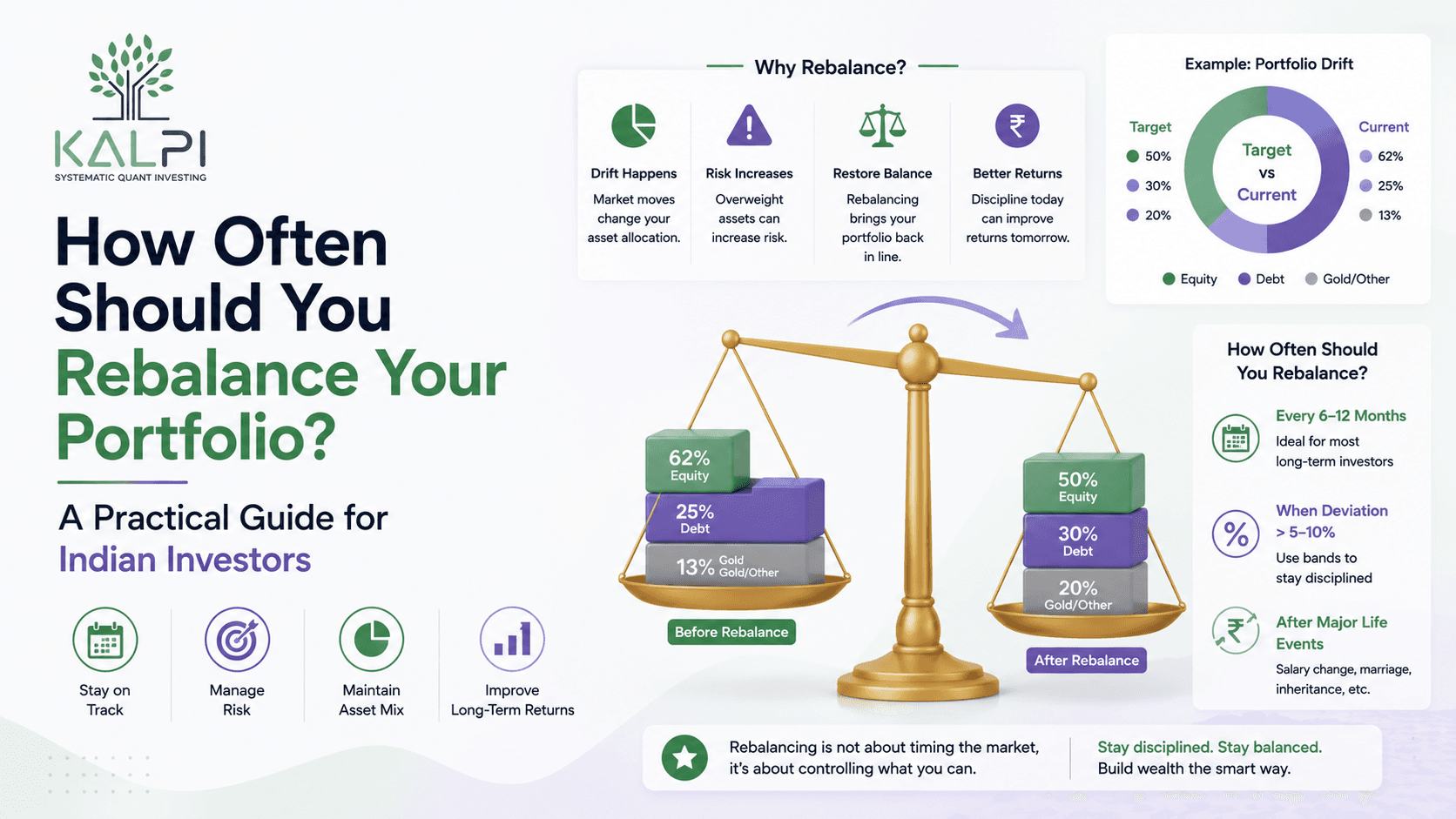
There is no single rebalancing schedule that works for every investor. For many long-term investors in India, reviewing a portfolio every quarter, or whenever the asset allocation moves noticeably away from the original plan, is a practical approach. The right frequency depends on your financial goals, risk tolerance, and investing style.
This article looks at how rebalancing frequency has played out for real portfolios over the past few years, using portfolio tracking tools that compare returns, drawdowns, and monthly performance against a benchmark. These are not predictions. They are patterns drawn from how Indian portfolios have actually behaved, and they help answer a question almost every investor asks sooner or later: how often should I really be rebalancing?
Why Does Portfolio Rebalancing Matter?
Imagine packing your school bag on a Monday morning. Everything has its place. The books are stacked neatly, the notebooks are in order, the lunch box fits perfectly, and the water bottle sits in its pocket.
By Friday, things look different. A few loose worksheets have found their way inside. An extra notebook has been added. There might even be a couple of wrappers lying at the bottom. You never planned for the bag to get heavier. It just happened, little by little.
Portfolios change in much the same quiet way. You may not notice it for months, but the balance you started with slowly begins to shift. Some investments grow faster than others, while some barely move. Even if you do not add a single rupee, your portfolio will not stay exactly the way you first built it.
That is where rebalancing becomes useful.
What Is Portfolio Rebalancing?
Think of portfolio rebalancing as resetting your investments to match the plan you originally made.
Suppose you decide to invest:
- 60% in equity
- 30% in debt
- 10% in gold
A year later, the stock market performs well and your equity allocation grows to 72%. Debt and gold now make up a smaller share of the portfolio.
Your investments have drifted away from the balance you originally wanted. Rebalancing simply means adjusting your investments so they move closer to that chosen allocation again. It is not about predicting where the market will go next. It is about making sure your portfolio still carries the level of risk you were comfortable with in the beginning.
Why Does a Portfolio Change on Its Own?
Many people assume a portfolio changes only when they buy or sell something. In reality, markets keep moving whether you touch your investments or not.
Some sectors perform better than others. Some companies report stronger earnings than expected. Interest rates shift. Economic conditions improve or weaken. All of this affects the value of what you hold.
As one asset grows faster than another, its share in your portfolio naturally increases. This gradual change is known as portfolio drift, and left unchecked for a long time, it can expose you to a lot more risk than you originally signed up for.
A good way to see this in action is to look at how a well-diversified equity portfolio has actually performed over the last three years against its benchmark.

A cumulative returns comparison showing how a consistently strong portfolio also carried a deeper drawdown, exactly the kind of drift that rebalancing is meant to manage.
Notice that this portfolio delivered stronger returns than the Nifty benchmark, but its maximum drawdown was also worse, at -17.89% against the benchmark’s -15.77%. That is not a coincidence. When you let winning positions run without trimming them, your portfolio takes on more concentration risk, and that shows up exactly where you would not want it, in the size of your losses during a downturn.
How Often to Rebalance Your Portfolio?
This is one of the most common questions investors ask, and the answer is not as simple as many people expect.
Some investors review their portfolio every month. Others prefer every quarter. Some are comfortable checking it only once or twice a year. There is no universal schedule that suits everyone.
Rebalancing too often can increase transaction costs and taxes. Waiting too long lets your portfolio drift much further from your target allocation than you intended. The goal is to find a routine you can realistically stick to over the long term, rather than choosing the shortest possible interval just because it sounds more disciplined.
Most portfolio analysis tools actually let you test this directly. You can pick a benchmark, set your holdings, and choose how often the portfolio rebalances, monthly, quarterly, yearly, or never, and see how the outcome changes.

A rebalancing frequency selector showing Never, Monthly, Quarterly, and Yearly options, the kind of setting most backtesting tools let you compare before deciding what suits your portfolio.
Monthly vs Quarterly Rebalancing
The debate around monthly vs quarterly rebalancing usually comes down to one question: how often should you make changes without overreacting to normal market movement?
On paper, monthly rebalancing sounds like the better option. If you check your investments every month, you can bring them back to your target allocation quickly. But more frequent reviews also tend to lead to unnecessary buying and selling. Depending on what you hold, that can raise your costs and pull you into decisions based on short-term noise that does not really matter in the long run.
Quarterly reviews usually strike a better balance. They give your portfolio enough time to shift meaningfully without pushing you toward constant adjustments over every small dip or rally. That is one reason many long-term investors lean toward quarterly reviews instead of monthly ones.
Table 1: Monthly vs Quarterly Rebalancing
| Feature | Monthly Rebalancing | Quarterly Rebalancing |
|---|---|---|
| Portfolio review | Every month | Every three months |
| Number of adjustments | Usually higher | Usually lower |
| Transaction costs | Can be higher | Generally lower |
| Best suited for | Active investors | Most long-term investors |
| Monitoring required | High | Moderate |
Looking at how portfolio returns actually move month to month makes this easier to picture. A portfolio’s monthly returns over a few years typically show sharp swings in single months, a 9% gain followed by a 7% drop, sitting inside a much steadier long-term uptrend. If you rebalanced after every single one of these monthly swings, you would be trading constantly, often against moves that reverse themselves within a quarter anyway. This is the practical case for quarterly reviews over monthly ones. The bigger picture matters more than any one month.
Choosing the Right Portfolio Rebalancing Strategy
A good rebalancing strategy should fit your financial goals, not someone else’s routine.
Some investors enjoy tracking their investments regularly. Others prefer checking them only a few times a year. Neither approach is right or wrong. What matters is choosing a schedule you can realistically follow.
For example, someone investing for retirement over the next 25 years may not need to review their portfolio every month. On the other hand, an investor managing several asset classes, or a larger and more complex portfolio, may prefer checking it more often.
The real benefit comes from consistency. A simple strategy followed for years usually works better than constantly changing your approach every time markets turn volatile.
Common Mistakes While Rebalancing
Rebalancing is a fairly simple idea, but a few common mistakes can quietly reduce how effective it is.
Rebalancing Too Often
Some investors start checking their portfolio every week. A small market move makes them buy or sell right away. Over time, this adds up in transaction costs and pulls them into unnecessary trading. Markets naturally move up and down, and every small change does not need a response.
Waiting Too Long
The opposite mistake is forgetting about the portfolio altogether. If equity performs exceptionally well for a few years in a row, it can end up taking a much larger share of your investments than you originally planned, and without you noticing, your overall risk rises with it. Regular reviews help catch this before it goes too far.
Making Decisions Based on Emotion
When markets rise sharply, it becomes tempting to keep adding money to whatever is performing best. When markets fall, fear often takes over instead. Neither situation should be driving your investment strategy. Rebalancing works best when your decisions are based on your original asset allocation, not on how you feel about the market that week.
Ignoring Costs and Taxes
Every buy or sell transaction can involve brokerage charges, taxes, or exit loads, depending on what you are invested in. Before making any change, it helps to ask yourself a simple question: does this adjustment genuinely improve my portfolio, or am I just reacting to short-term market movement? That small pause often prevents a transaction you did not really need to make.
This is also visible in how drawdowns play out over time. A portfolio that stays diversified and gets reviewed periodically tends to recover from dips in a way that closely tracks its benchmark, rather than lagging far behind it.
Does Rebalancing Increase Returns?
A lot of people assume portfolio rebalancing is mainly about chasing higher returns. It is not.
Its primary purpose is to keep your portfolio aligned with the level of risk you originally planned for. Sometimes rebalancing improves your long-term returns. Sometimes it slightly reduces them, because you end up selling investments that were still performing well. Both outcomes are completely normal.
Think of rebalancing as maintaining balance rather than chasing performance. Its biggest strength is that it keeps you disciplined even when markets become unpredictable, and that discipline is worth more over a full market cycle than trying to time every high and low.
Table 2: Which Rebalancing Frequency May Suit Different Investors?
| Investor Type | Suggested Review Frequency | Why It May Work |
|---|---|---|
| Beginner investor | Quarterly | Easy to follow without frequent trading |
| Long-term investor | Half-yearly | Keeps the portfolio balanced with fewer adjustments |
| Active investor | Monthly or quarterly | Suitable for investors who track markets regularly |
| Retirement-focused investor | Yearly | Helps maintain planned risk with minimal trading |
| Experienced investor | Quarterly, with allocation limits | Reviews regularly but rebalances only when needed |
Should You Rebalance Only Based on Time?
Not necessarily.
Some investors follow a calendar. They review their portfolio every month, every quarter, or once a year, and rebalance whenever they check in. Others prefer a threshold-based approach instead. Rather than watching the calendar, they track how much their asset allocation has shifted. For example, if equity was originally meant to stay at 60% but grows to 67%, they rebalance only once it crosses that limit.
This method cuts down on unnecessary transactions while still keeping the portfolio reasonably close to its original plan. For many long-term investors, combining both approaches works best. They review their investments every quarter but only make changes once the allocation has moved noticeably away from what they set out to hold.
A Quick Checklist Before Rebalancing
Before making any changes, ask yourself these questions:
- Has my asset allocation changed significantly?
- Are my financial goals still the same?
- Has my risk tolerance changed?
- Am I reacting to market news, or following my original plan?
- Will this adjustment actually improve the balance of my portfolio?
If most of your answers point toward making a change, rebalancing is probably the right step.
Final Thoughts
If there is one thing worth remembering, it is this: your portfolio should reflect your financial plan, not yesterday’s market movement.
There is no perfect schedule that works for everyone. Some investors are comfortable reviewing their portfolio every quarter. Others may only need to check in once or twice a year. When comparing monthly vs quarterly rebalancing, remember that reviewing your investments more often does not automatically produce better results. A disciplined process usually matters far more than the number of times you rebalance.
If you are still working out how often to rebalance your portfolio, start with a schedule that matches your investing style and stick to it. You can always make small adjustments later as your goals or circumstances change.
Markets will keep moving. Your financial goals may stay the same for years. Portfolio rebalancing is simply a way of making sure your investments continue supporting those goals instead of quietly drifting away from them.
Frequently Asked Questions
1. How often should I rebalance my portfolio?
For many long-term investors, reviewing the portfolio every quarter is a practical starting point. That said, there is no fixed rule. The right frequency depends on your goals, your risk tolerance, and how far your asset allocation has actually moved.
2. Is monthly rebalancing better than quarterly rebalancing?
Not always. Monthly reviews can keep your portfolio closer to its target allocation, but they often come with higher transaction costs and more trading than is really necessary. Quarterly reviews tend to offer a better balance between staying disciplined and avoiding unnecessary adjustments.
3. What is portfolio drift?
Portfolio drift happens when one investment grows faster than the others, quietly changing your original asset allocation. This happens naturally as markets move, even if you never buy or sell anything yourself.
4. Can beginners follow a portfolio rebalancing strategy?
Yes, and it does not need to be complicated. Reviewing your portfolio every few months and checking whether your original allocation has shifted significantly is usually enough to build a solid, disciplined investing habit.
5. Does portfolio rebalancing guarantee higher returns?
No. Rebalancing is primarily a risk management tool. Its job is to keep your portfolio aligned with your planned allocation, not to guarantee better performance. It can support long-term discipline, but it should never be treated as a way to consistently beat the market.